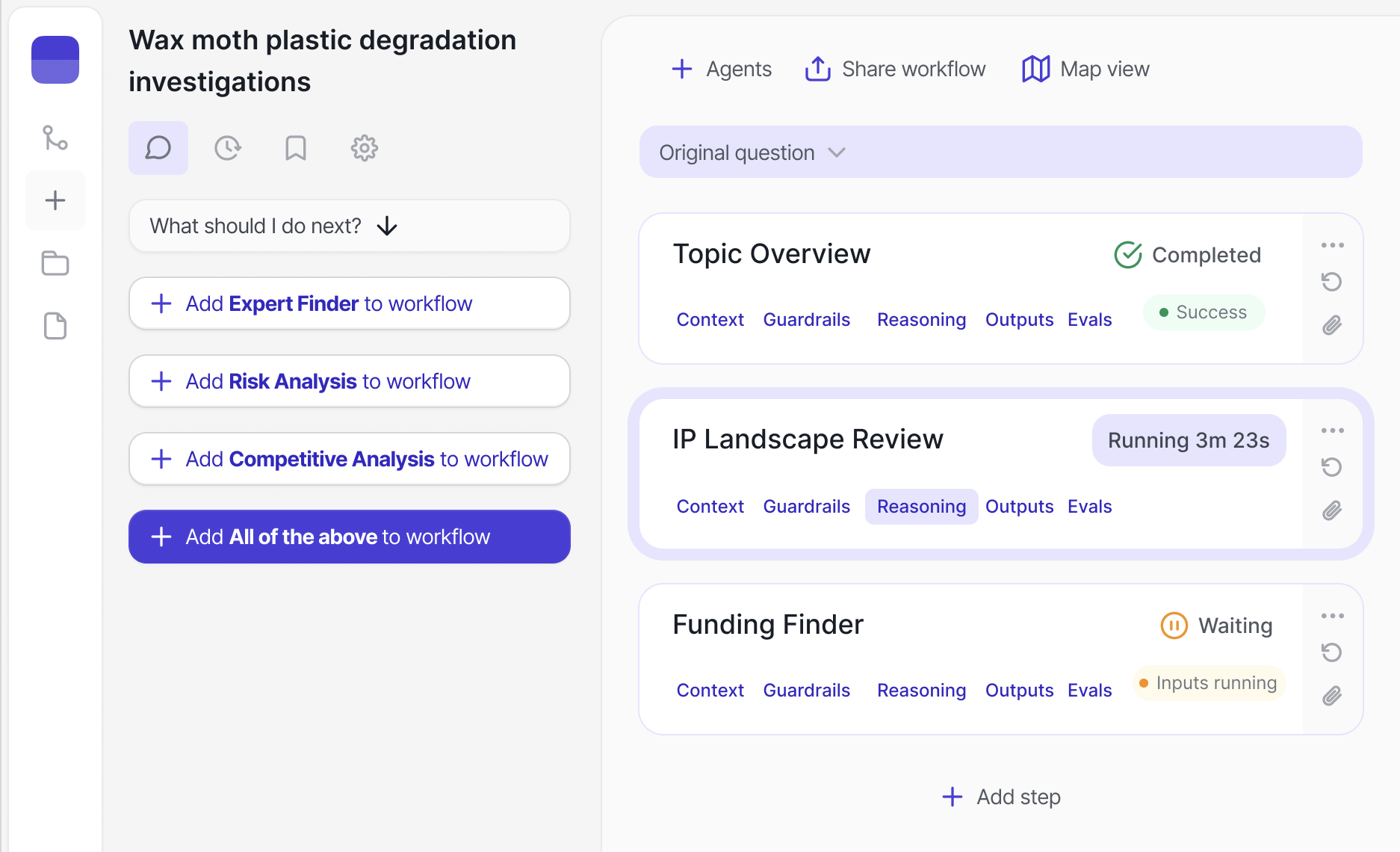
Sciansa: AI for Scientists
Led design for a multi-agent AI platform that helps scientists accelerate their research from hypothesis to publication. Developed patterns to bridge the gap between AI capability and scientific trust.
Overview
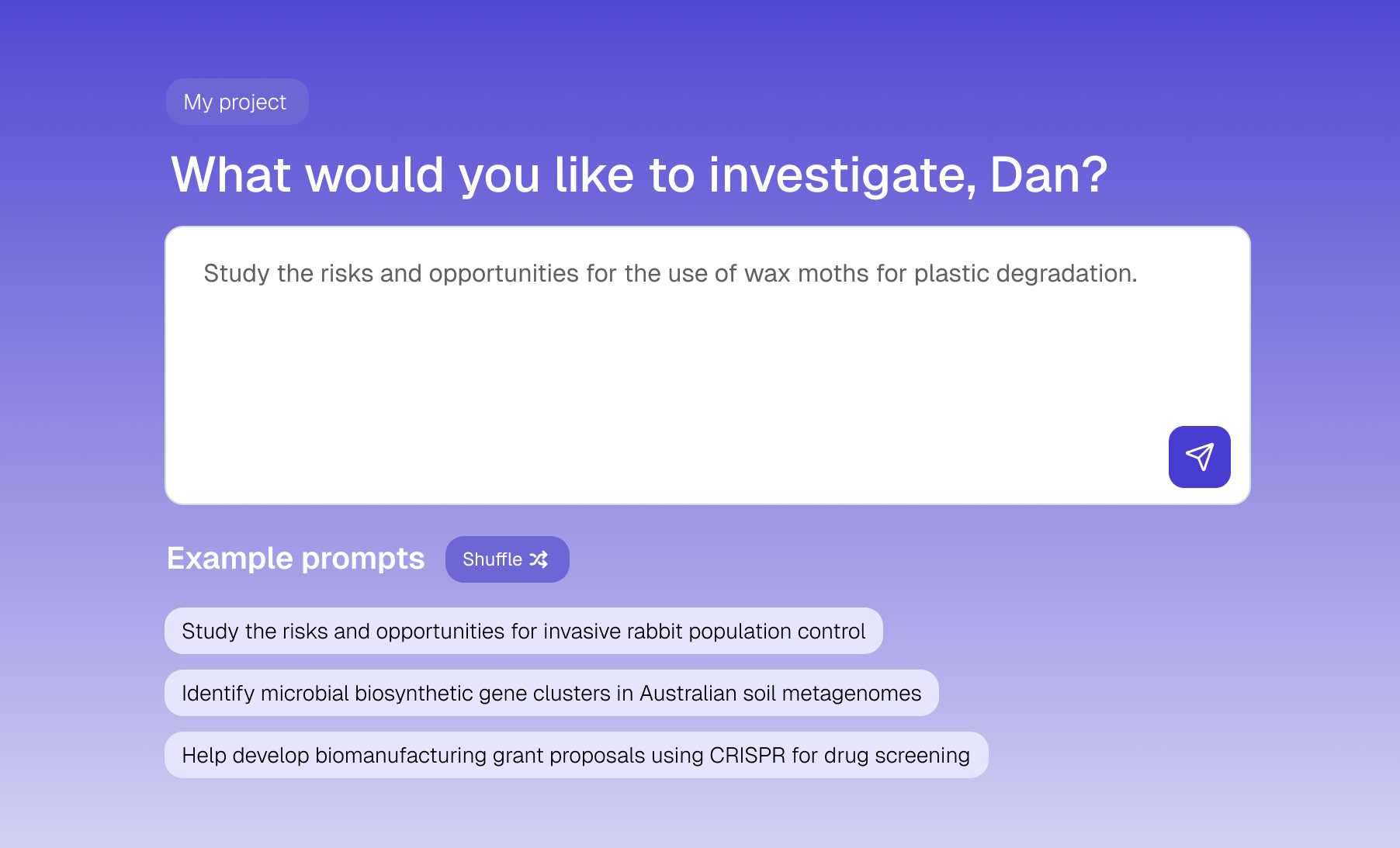
Sciansa is a multi-agent AI platform designed to help experimental biologists identify key genes and understand biological pathways without requiring command-line expertise or deep computational knowledge.
The platform represents a fundamental shift in how scientists interact with AI tools—moving from technical interfaces that require extensive training to intuitive systems that respect scientific workflows and decision-making processes.
As Principal Product Designer, I led early stage problem definition, concept development, testing, product iteration, and final design of the MVP. Our product currently serves over 2,500 scientists across CSIROs, with a focus on building trust through transparency and steerability.
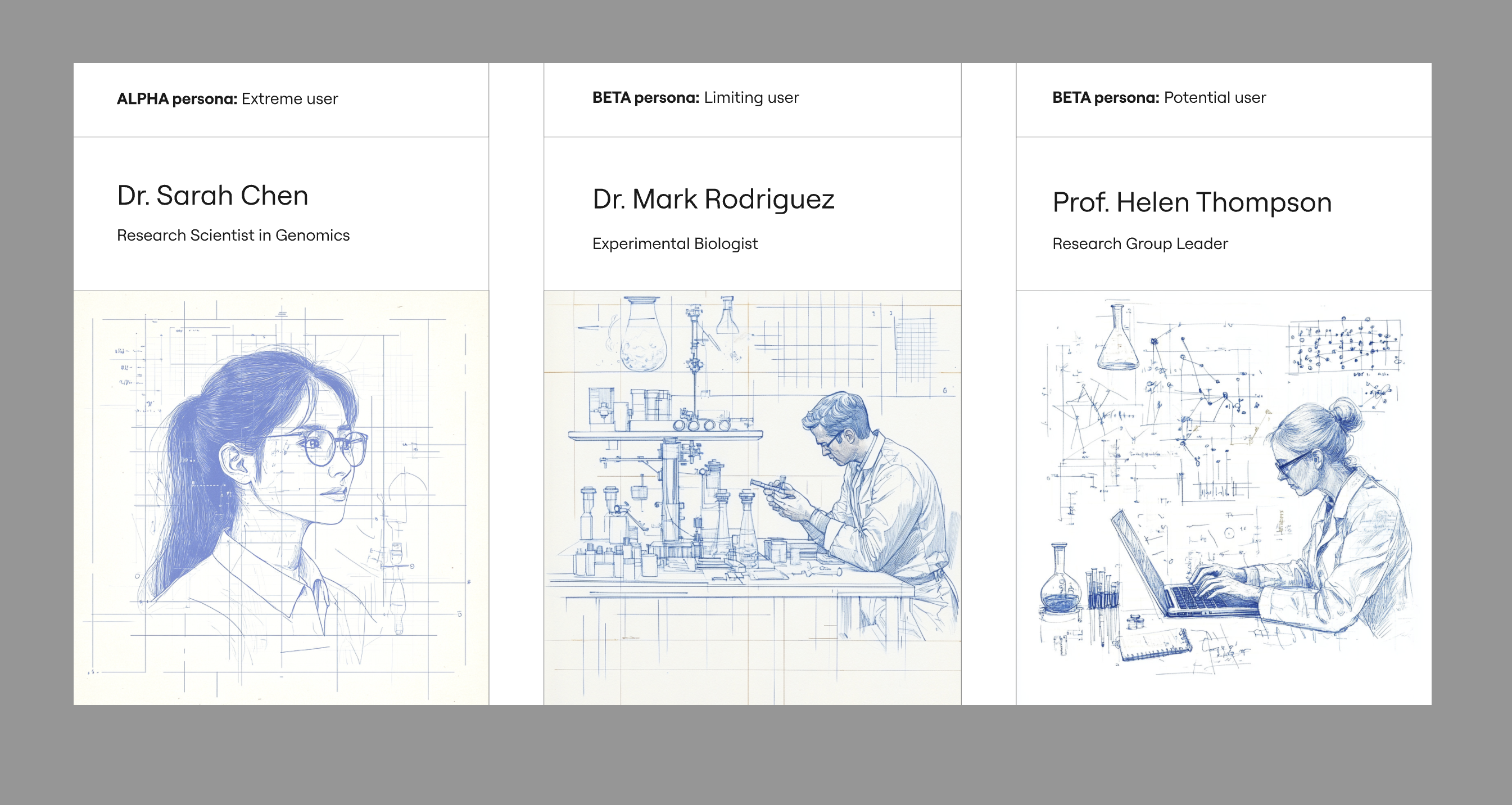
Scientists studying genetic function face several key challenges in their research workflows. Genome assembly and annotation still requires access to supercomputing resources, while manual prediction of gene functions is both time-consuming and often yields low-confidence results. Experimental validation creates bottlenecks due to cost and time constraints. Researchers also struggle with a lack of integrated tools for end-to-end analysis and face difficulties managing data across different systems. We needed to design a system that could deliver powerful AI capabilities while maintaining the transparency and control that scientists require to trust the results. The path to building our ALPHA prototype turned insights from extensive co-creation work with domain experts, user research, and product development into a design process that iteratively refined our understanding of the problem space and the needs of the users. The research revealed that scientists needed three things: visibility into AI reasoning, the ability to string workflow steps together, and clear explanations of how results were generated. These became the core principles guiding every design decision. The final design implementation focussed on natural language prompting of AI agents for scientific workflows. We focused on:
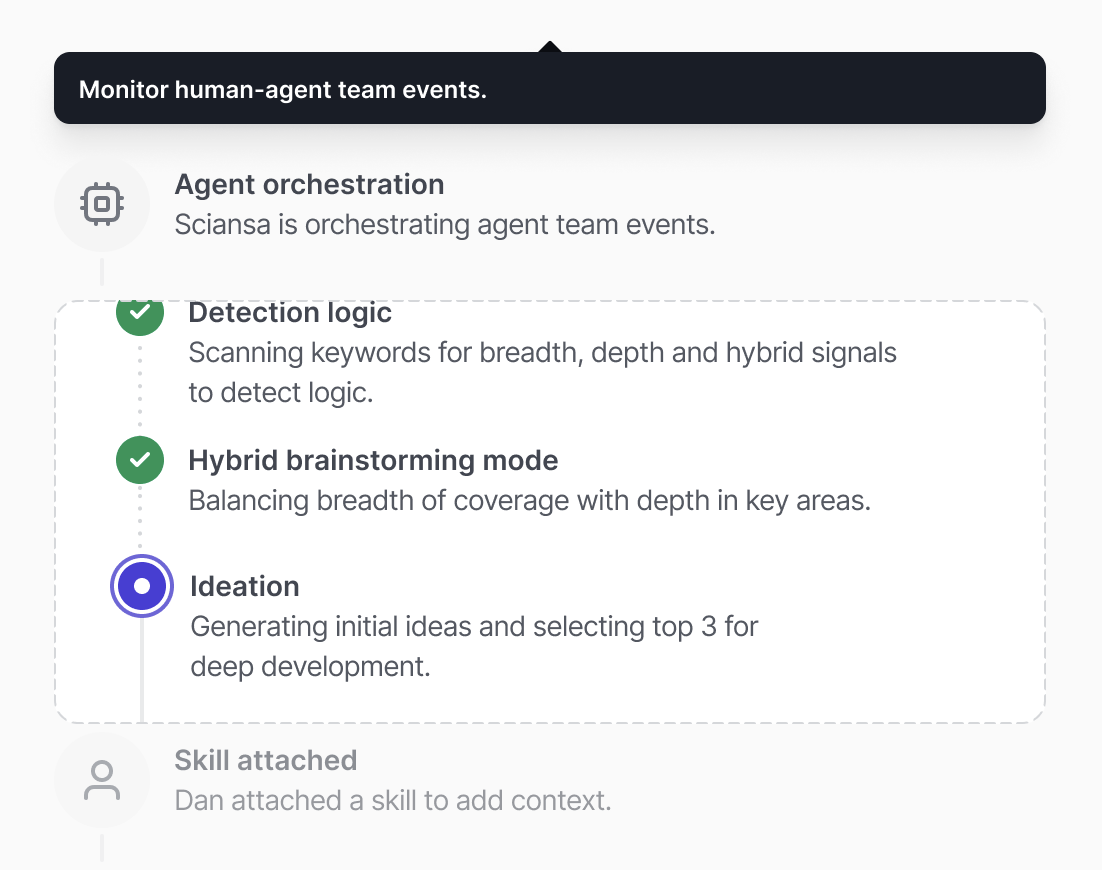
1. Developing a natural language interface for interacting with AI agents 2. Integrating research prototypes and workflows 3. Providing flexible automation that enhances rather than replaces scientific judgment 4. Maintaining domain-specific heuristics crucial for experimental design 5. Technical scaling 6. User authentication Our approach combined technical capabilities with deep respect for scientific practice, creating a platform that augments rather than displaces the research process. The result is a system that helps manage complexity while preserving the rewarding problem-solving aspects of scientific work that researchers value most.The Challenge
Approach
Solution